


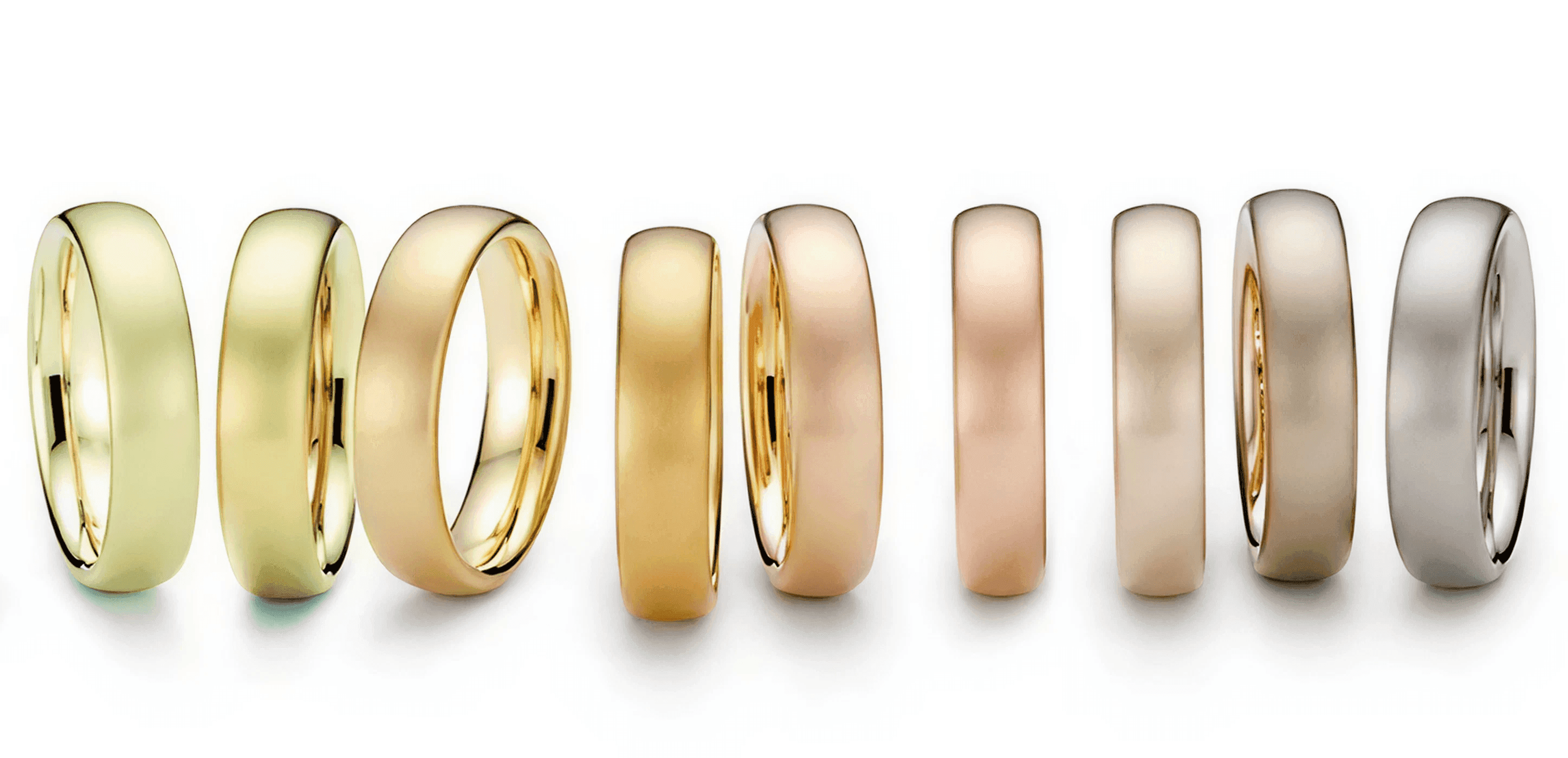
METAL GUIDE
Gold
Timeless, radiant, and versatile — gold remains a classic choice. It’s available in multiple tones and purities to suit different preferences and budgets.
14K vs. 18K: What's the Difference?
- 14K Gold: Contains 58.5% pure gold. More durable and scratch-resistant , ideal for everyday wear.
- 18K Gold: Contains 75% pure gold. Richer in color and slightly softer , perfect for a luxurious, warm glow.
- Both are great options — your choice depends on whether you value richness in tone or day-to-day strength.
Yellow, White & Rose Gold
Each gold color brings its own personality to your jewellery. Here's how to choose:
Gold Type | Pros | Wearability | Care Tips |
|---|---|---|---|
Yellow Gold | Warm, classic, traditional | Great for warmer skin tones | Regular polishing to retain shine |
White Gold | Sleek, modern, looks like platinum | Very versatile, suits all tones | Rhodium plating may need refreshing |
Rose Gold | Soft, romantic, vintage appeal | Flatters most skin tones | Less prone to tarnish, gentle cleaning only |
Rose Gold
Rose Gold has become a favorite for modern romantics. Its pinkish hue blends vintage charm with modern elegance.
- Why It's Loved: Romantic, feminine, and distinctive.
- Perfect For: Engagement rings, mixed-metal styles, and everyday pieces.
- Care Tip: Clean with mild soap and water. Avoid harsh chemicals to maintain the rosy tone.
Metal Composition / Gold Type | 18 K Yellow Gold | 18 K White Gold | 18 K Rose Gold |
|---|---|---|---|
Gold % | 75% | 75% | 75% |
Silver % | 10-20% | 18.50% | 2.5% |
Copper % | 5-15% | 1% | 25.25% |
Zinc % | 0 | 5.50% | 0 |
Platinum
A naturally white metal with a cool, clean tone — platinum is the epitome of strength and subtle luxury.
- Durability: Heavier and denser than gold; ideal for daily wear.
- Hypoallergenic: Perfect for sensitive skin; contains no mixed alloys.
- Compared to Gold: More expensive but lower maintenance over time. No rhodium plating needed, and it develops a beautiful natural patina.